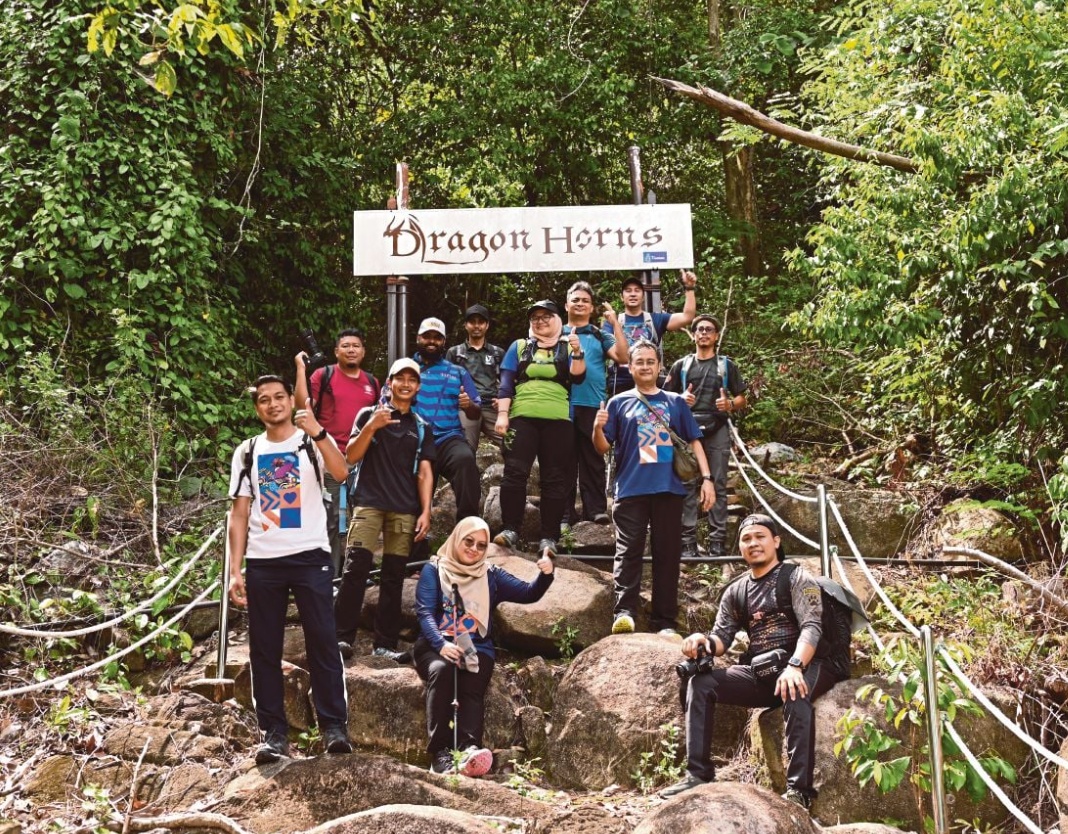
TIOMAN: On Pulau Tioman villagers say legends of dragons, pirates and wartime graves remain tied to daily life and the island's identity. In Kampung Mukut, history is not confined to books; it is passed down through conversation and the landscape, shaping how residents understand their home. To outsiders, Tioman may be a tropical getaway. But to locals, the island was formed from a dragon, with its jagged peaks symbolising the creature's horns. Tour guide Mohamad Zaini Abdul Wahab, also known as Amy Rock, said the dragon legend had been passed down through generations.
"They say two dragons came from Tasik Chini and fought. The male dragon was badly wounded and made his way out to sea." Accounts differ on why the dragons clashed, but villagers agree on how the story ends. "He got stuck here and became what we now see as Tioman," Zaini said. The female dragon, according to the tale, is believed to have turned into Pulau Daik, an island with twin peaks resembling Tioman's. In another version, the wounded dragon is said to have sought permission from the Sultan of Pahang before passing through a river, appearing in his dreams to request safe passage. Villagers were told to clear the riverbanks for several days to allow the creature to pass, he said. For Kampung Mukut residents, such stories are more than folklore. They are a way of reading the land, where every ridge and rock is tied to something older than written history.
Beyond the myths, the village also holds reminders of the past. Near Kampung Nipah lie burial sites believed to date back to
the Japanese occupation during World War 2, alongside older graves linked to pirates. "There are two or three Japanese graves there. They used wooden markers, not headstones. Some have wooden crosses," Zaini said. He said villagers discovered the site after finding artefacts while digging in the area. "We knew it was a Japanese burial site when villagers digging in certain areas found items from that time, including clothing and other belongings believed to be from the war. "Until today, the graves are still there."
The site is largely unknown to visitors and is treated with quiet respect. "People know about it, but they don't really talk about it." Long before the Japanese occupation, the waters around Tioman were believed to have hosted pirates. "If you go back even further, there were pirate bases here. This place has seen many eras." Some villagers believe that in the 1900s, sites where pirates kept their treasures were discovered, though what happened to them remains unclear.
Today, these layers of history sit alongside lighter tales, including the Matchmaking Pool, a natural body of water behind village resorts. "It was just an ordinary pool at first. Then one villager met another there and they later married," Zaini said. As similar stories spread, the site gained a reputation. "People started saying, 'If you want to find a partner, go there'." Oral histories trace Kampung Mukut's beginnings to the 1960s, when early settlers lived deeper in the forest before moving towards the coast for trade, migration and safety.
Tourism developed in the 1980s through small homestay-style arrangements. Today, residents say there is growing awareness of the need to preserve traditional knowledge, from reading winds to navigating by the stars. For Zaini, the stories are as important as the scenery. "Every place here has a story." To visitors, Kampung Mukut may appear to be a quiet coastal village at the foot of Gunung Kajang, but beneath its surface lies a layered history carried through memory, myth and oral tradition.